Blogs | Apolloskilllabs

Natural Gas in ETRM
apollo

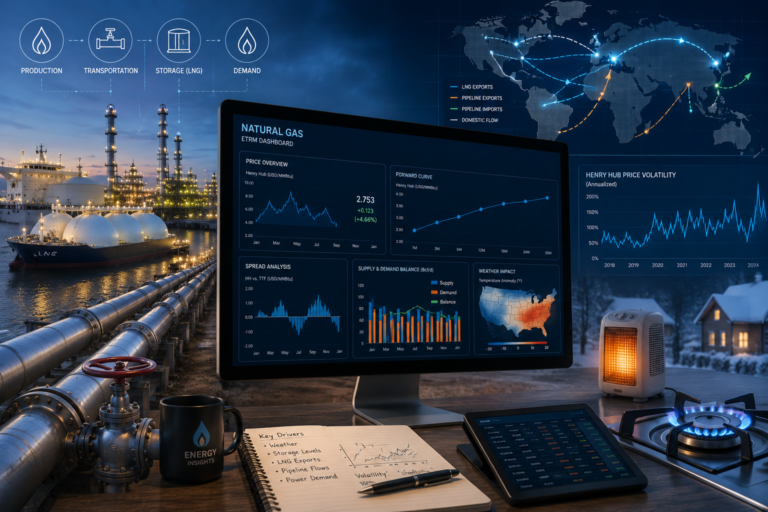
Natural Gas in ETRM: Why This Market Trades So Differently

A single pipeline hub in Louisiana sets the benchmark price for gas across an entire continent – understanding why says a lot about how this market, and the systems built to trade it, actually work. Energy Trading & Risk Management Insights Natural gas is one of the largest, most established energy markets in the world, and also one of the most physically constrained. It’s an abundant, clean-burning fuel that exists as a gas at room

Read More »
Physicals, Forwards, and Futures in ETRM
apollo

Physicals, Forwards, and Futures in ETRM: The Building Blocks of Energy Markets

Before options, swaps, and exotic structures ever enter the picture, energy trading rests on a small set of core submarkets – and getting those fundamentals right is what makes everything built on top of them work. Energy Trading & Risk Management Insights It’s tempting to think of energy trading as a world of complex derivatives and quant models, but nearly all of it sits on top of a handful of foundational markets. Electricity markets in

Read More »
Hedging in etrm
apollo

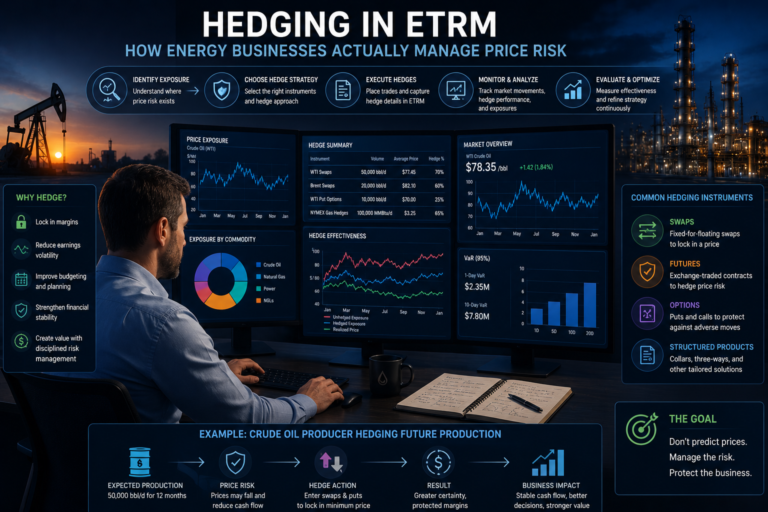
Hedging in ETRM: How Energy Businesses Actually Manage Price Risk

An airline doesn’t fly on hope that jet fuel prices stay flat. Here’s how hedging instruments, and the systems that manage them, actually protect a business from the volatility that commodities are famous for. Energy Trading & Risk Management Insights Commodity prices move in ways equity or currency prices simply don’t. They’re an independent asset class with their own drivers, and they’re constantly exposed to supply chain disruptions that can shift a price overnight. For

Read More »
upstream and midstream in oil production in etrm
apollo

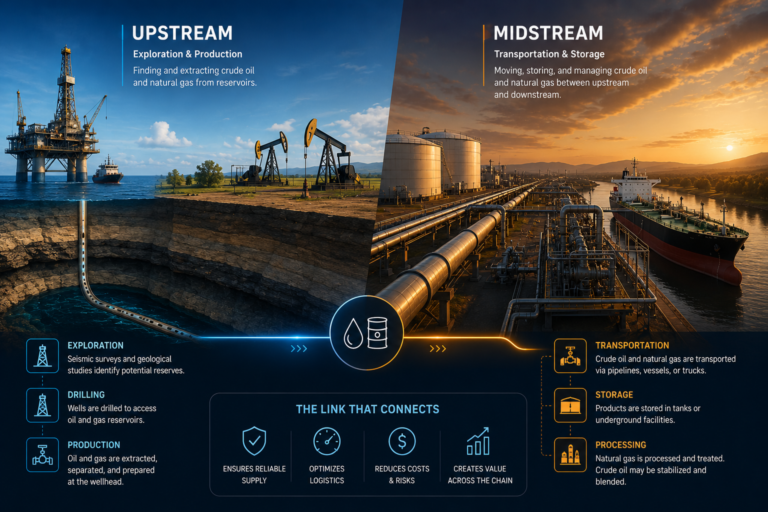
Upstream and Midstream in Oil Production: What Every ETRM User Should Understand

Before a barrel of crude ever reaches a trading screen, it passes through a physical chain of wellheads, separators, pipelines, and gas plants – and understanding that chain is what makes ETRM data actually make sense. Energy Trading & Risk Management Insights It’s easy to think of oil and gas trading as a purely financial activity – prices, curves, positions, settlements. But every one of those numbers traces back to a physical process: hydrocarbons being

Read More »
Risk Management in ETRM
apollo

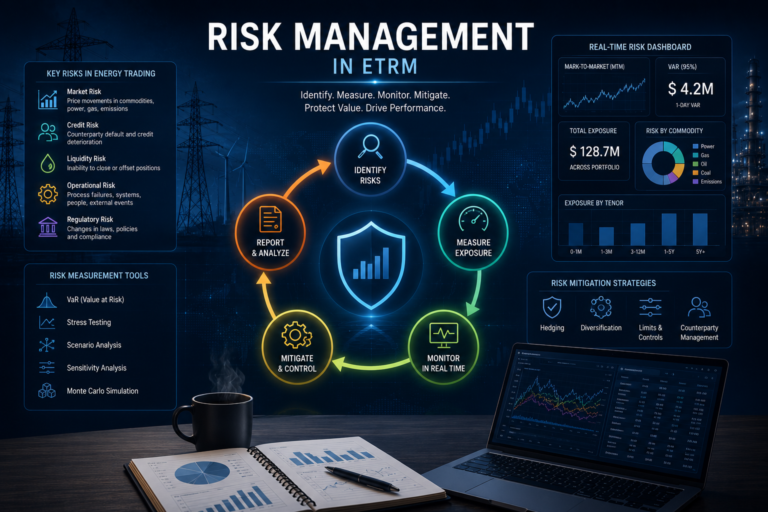
Risk Management in ETRM: Market, Credit, Concentration, and Beyond

Commodities are consistently the most volatile major asset class – here’s how energy trading desks actually measure that risk, and what they do about it once they know the number. Energy Trading & Risk Management Insights Of the four major trading asset classes – equity, interest rate, currency, and commodities – commodities have historically carried the widest volatility range by a clear margin. Quarterly crude oil volatility since 1983 has swung between roughly 12.6% and

Read More »
trade lifecycle
apollo

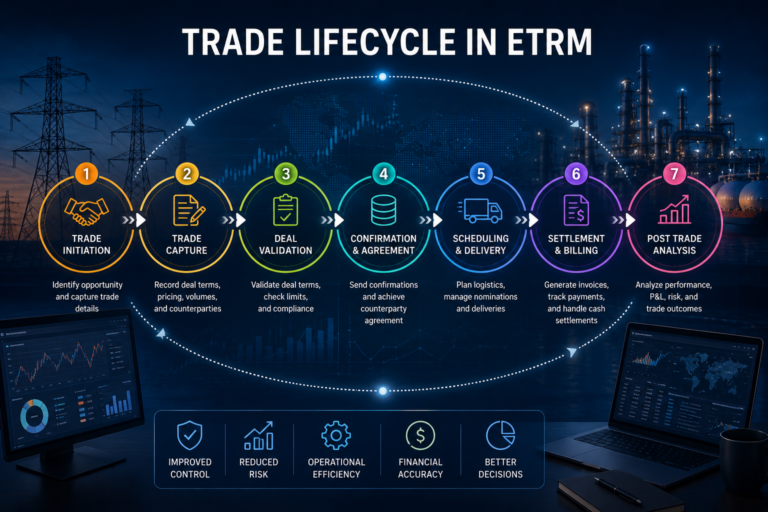
The Trade Lifecycle in ETRM: From Deal Capture to Cash

A single oil trade quietly passes through more hands, checks, and systems than most people outside the industry ever realize – here’s what actually happens between “deal done” and “cash received.” Energy Trading & Risk Management Insights When a trader agrees a price with a counterparty over the phone or on-screen, that moment is really just the start of the story. What follows is a structured sequence of checks, valuations, confirmations, and settlements that an

Read More »
quant models in etrm
apollo

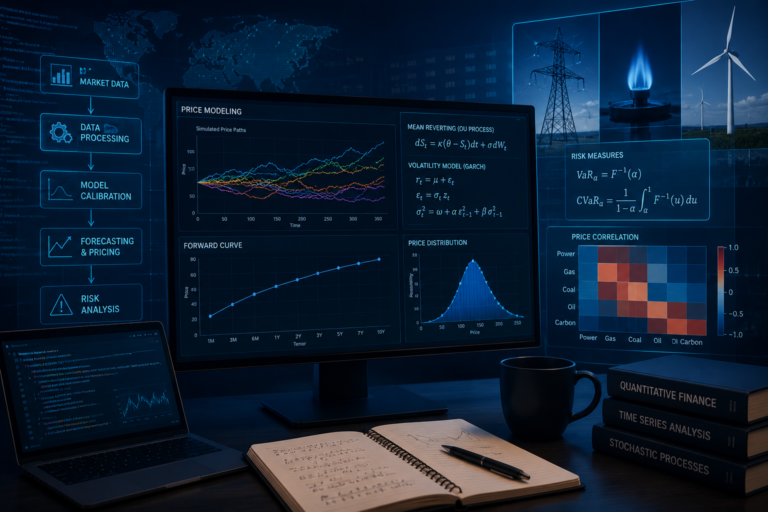
Quant Models in ETRM: How Energy Prices Actually Get Modeled

A practical walk-through of the stochastic models behind spot and forward price behavior – and why every one of them comes with a built-in limitation. Energy Trading & Risk Management Insights Every ETRM system, no matter how sophisticated its user interface or how fast its deal capture engine runs, is ultimately built on top of a handful of mathematical assumptions about how energy prices move. Understanding those assumptions – and their limits – is what

Read More »
Trading Strategies
apollo

Two Trading Strategies Every Power and Gas Desk Should Understand: Spot-Futures Arbitrage and Statistical Arbitrage

How a power generator with below-average efficiency can still turn a profit – not by predicting prices, but by trading the spread between fuel and electricity. Energy Trading & Risk Management Insights Ask most traders how to make money in energy markets and the instinct is to try to predict where prices are headed. It’s the wrong question. Commodity and power markets listed on liquid exchanges are close enough to efficient that no participant can

Read More »
Fuel Market Connectedness
apollo

Fuel Market Connectedness and Fuel Portfolio Risk: Why Diversification Doesn’t Always Mean Safety

Every energy trading desk eventually runs into the same question: if a company buys crude oil or natural gas from three different regional benchmarks instead of one, is it actually reducing risk, or just spreading the same risk across a wider surface? The intuitive answer is “diversification always helps.” The mathematics of market connectedness says otherwise – and the difference matters enormously for how procurement desks, refiners, and utilities structure their fuel portfolios. What “Connectedness”

Read More »